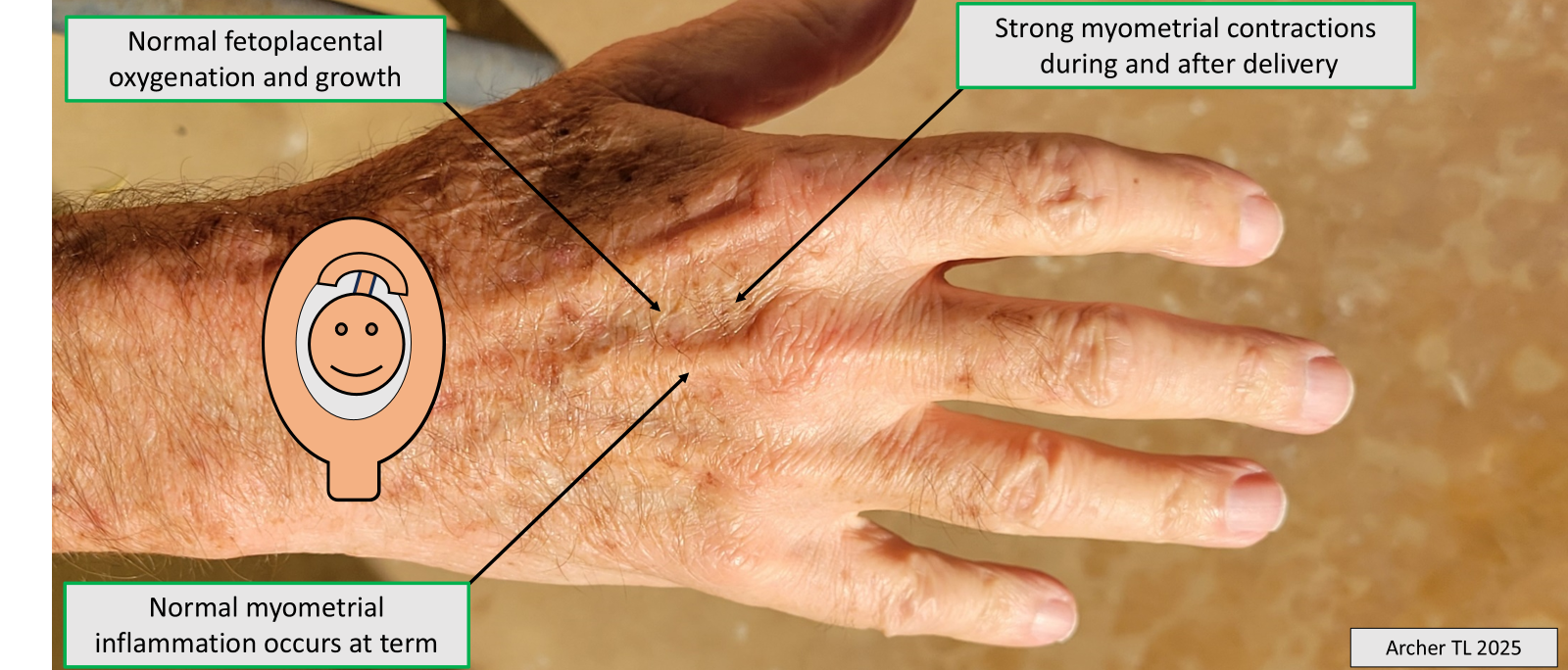
Figure 6Imagine my hand as a healthy uterus with no obstruction to its venous return-- that is, with no tourniquet around my forearm!
Imagine my hand as a "uterus" with no obstruction to its venous return. The imaginary "fetus" inside my hand grows to its full potential and the uterine muscle (myometrium) undergoes normal inflammation at term, initiating term labor, rather than preterm labor. Also, due to adequate oxygenation of the myometrium, the uterus contracts well, both during labor and after delivery, thereby avoiding hypotonic dysfunctional labor and postpartum hemorrhage, respectively.
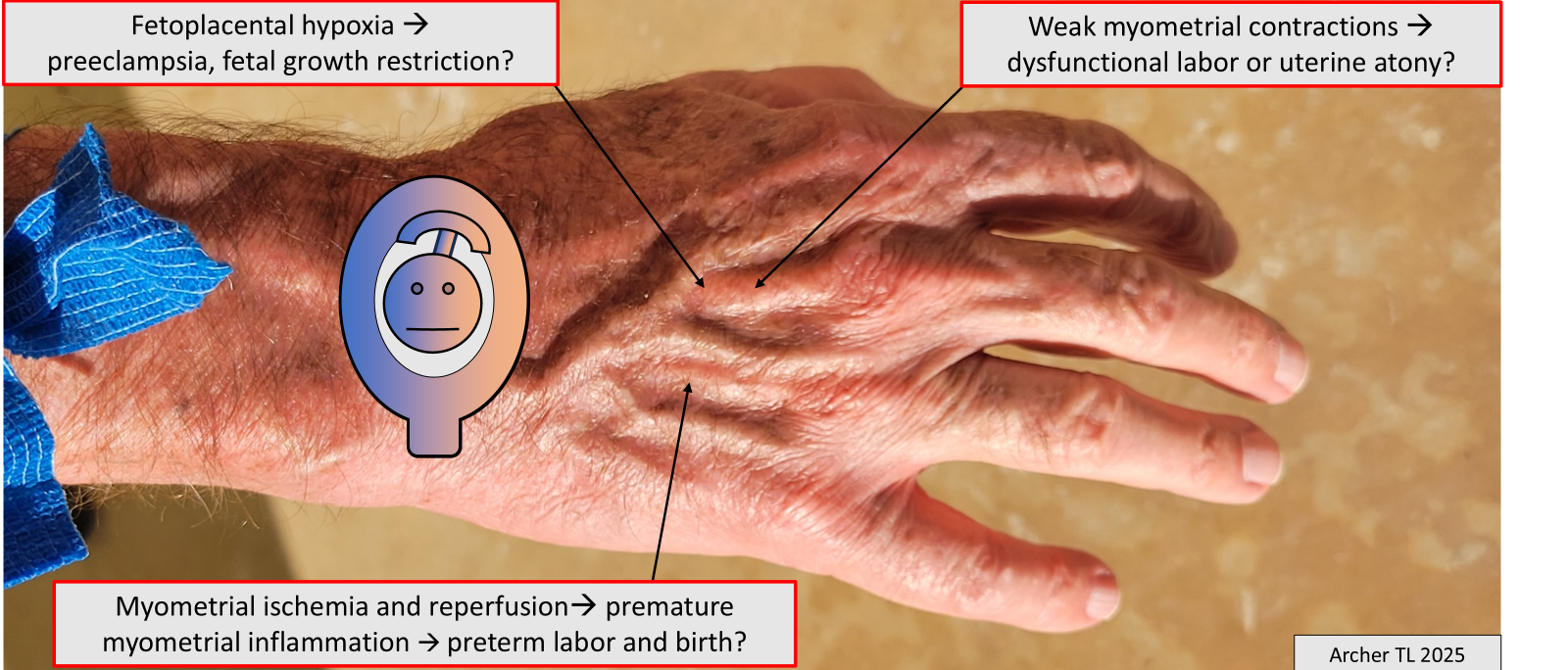
Figure 7Now, imagine my hand as a uterus suffering from obstruction of uterine venous return (OUVR)! The tourniquet around my forearm provides the OUVR in this visual analogy.
With high uterine venous pressure and poor uteroplacental and fetoplacental perfusion, the fetus may not develop normally, resulting in fetal growth restriction. Also, the ischemic myometrium may become inflamed prematurely, resulting in preterm labor. When labor does begin, the ischemic myometrium may not contract well, resulting in hypotonic dysfunctional labor and cesarean delivery.